
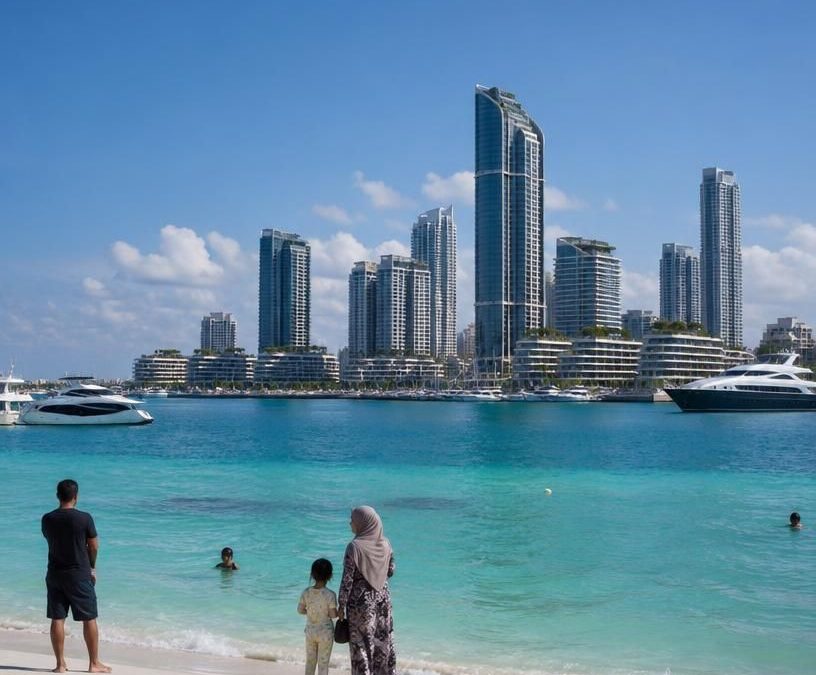
From the beach at Gulhi, you're looking out over the same stretch of Kaafu Atoll that is about to become home to the biggest development the Maldives has ever seen.
On 21 September, the Maldivian government signed an agreement with Abu Dhabi developer Eagle Hills to build a waterfront and marina city at Ras Malé. It will sit on reclaimed land in the Fushi Dhiggaru lagoon, about 17 minutes by speedboat from Malé. Most reports put its value at around $12 billion across its phases, and some estimates reach $20 billion. Either way, it's a huge number for a country of just over half a million people.
For those of us on Gulhi, this isn't distant news. Ras Malé and Gulhi share the same atoll, the same waters and the same speedboat routes out of Malé. What gets built there will shape this whole corner of the Maldives for the next decade and beyond.
What's being built
The man behind the project is Mohamed Alabbar, the developer who also founded Emaar, the company behind Dubai's Burj Khalifa. "Well, there's only one Maldives in the world," he said. "It's the dream … people go there and pay $4,000 a night."
The plans cover about 550 hectares and include:
- international hotels and branded residences
- a marina and waterfront promenade
- shops, restaurants and entertainment
- wellness, education and healthcare facilities
- 5,000 homes for Maldivian families
The government's case is that it gets the investment without taking on debt. Under the reported terms, the state receives 10% of commercial sales revenue and 4% on every property sale and resale. Infrastructure Minister Dr Abdulla Muththalib called it "the largest investment programme in our history – billions of dollars of foreign investment."
Early estimates point to more than 54,000 jobs over the project's lifetime and over 1 million visitors a year.
Why it matters for Gulhi
Twelve-room guesthouses and $4,000-a-night resorts might sound like different worlds, but they share the same boats, the same reefs and the same visitors.
More people discovering the area. A million extra visitors a year means many more travellers coming into the Malé area. Not all of them will want a branded resort for their whole trip. Many want a day on a real local island, a swim off a quiet beach, a plate of mas huni for breakfast. Gulhi offers all of that, about 30 minutes from the airport.
Better connections. Big projects bring more boats, more routes and better transport around Malé. That could make islands like Gulhi easier to reach.
Two sides of the Maldives, side by side. Ras Malé will show the glossy, modern Maldives. Gulhi shows the version that's been here all along: a fishing community, sandy lanes, neighbours who know each other, and one of the finest beaches in South Malé Atoll. The best trips may well include both.
Keeping an eye on the reef
Living on a small island, you notice the sea. The reefs around Gulhi are the reason guests come snorkelling with us, so how Ras Malé is built matters to us.
Eagle Hills has committed to no dredging beyond the planned reclamation, plus independent marine monitoring throughout construction. Alabbar has spoken about protecting "the turtles and the fish and the corals." We hope those promises hold, and we'll be watching.
What happens next
Construction is expected to start in early 2027, and the build will take 10 to 15 years. Emaar may join as a 50:50 partner. Much of the detail is still being worked out.
Ras Malé will take years to finish. Gulhi is ready now: 12 rooms, a quiet beach and a scheduled speedboat from the airport. Come and see this part of the Maldives before it changes.
[Book your stay at Tropic Tree →]